Wild Quinine
Wild Quinine (Parthenium integrifolium)
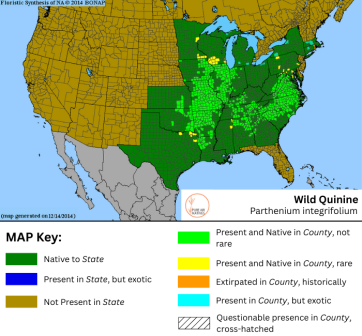
Range: Parthenium integrifolium is a perennial native to Wisconsin's tallgrass prairies, throughout the Midwest and eastern United States.
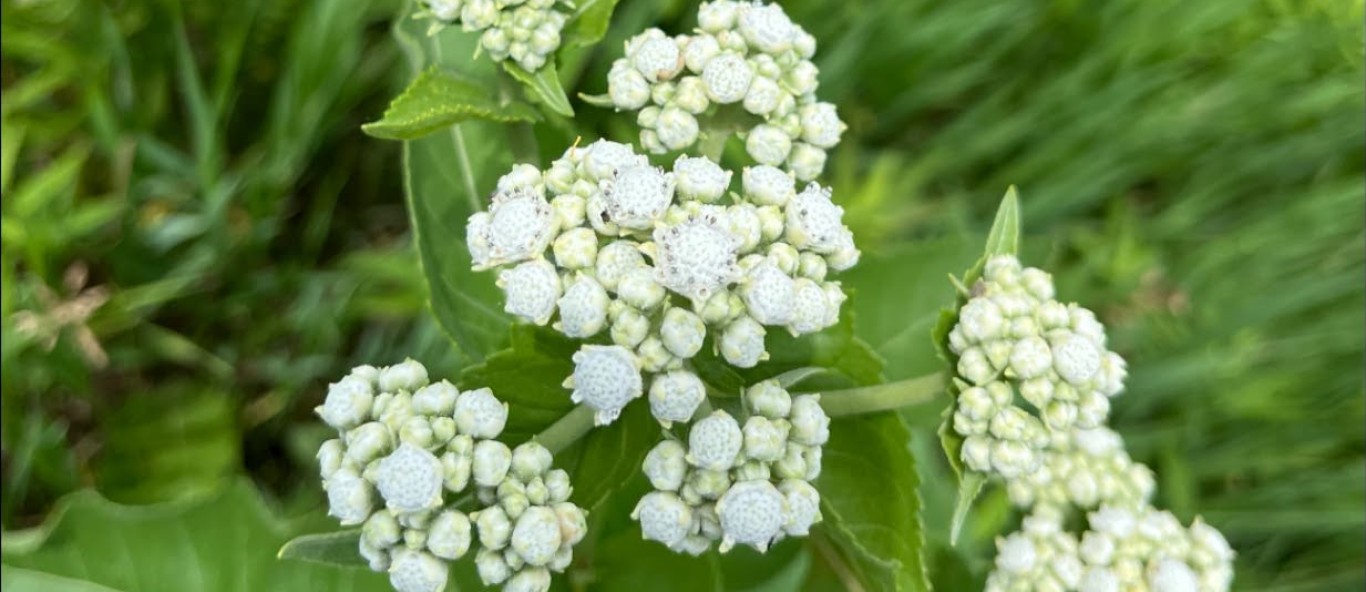
Description & Impact: It is in the sunflower (Asteraceae) family, but with small white “cauliflower”-like flower heads, rather than the flashy yellow of a typical sunflower. This plant will typically grow 2 to 4 feet tall with a spread of 2 to 4 feet. Much like other species in this family, the leaves are bitter, sandpapery and serrated, making them unpalatable to many insect pests and deer. The flowers attract many pollinators like bees, butterflies, moths and ants. Female leaf-cutter bees use its leaves to line their nests.
Plant Medical History: Native Americans used the leaves for poultices for burns, roots for tea to treat dysentery, and the ashes for horses with sore backs. During World War 1, it was used as a substitute for cinchona bark to treat malaria when supplies were disrupted.
Cultivation & Garden Use: Wild quinine grows in USDA hardiness zones 3a through 8b, thriving in full sun but tolerant of partial shade. It grows in well-drained soils ranging from sandy loam to clay. The plant is drought-tolerant and can regenerate via seeds or rhizomes, making it resilient in natural habitats. This plant is low-maintenance and suitable for rock gardens, cottage gardens, prairies, and meadows. Its long blooming period and positive impact on pollinators make it a popular choice for native plant gardens.