Smooth Blue Aster
Smooth Blue Aster (Symphyotrichum laeve)
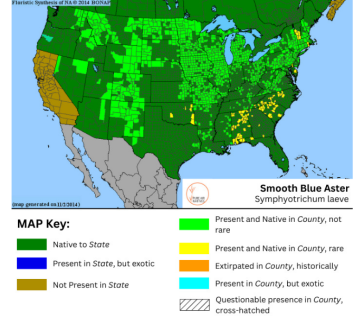
Range: Symphyotrichum laeve native perennial wildflower with a very wide range across North America, found in prairies, meadows, and open woodlands from the northern Rocky Mountains and Great Plains to the northern Great Lakes and into parts of the Intermountain West and Central and Eastern USA, as well as Canada.
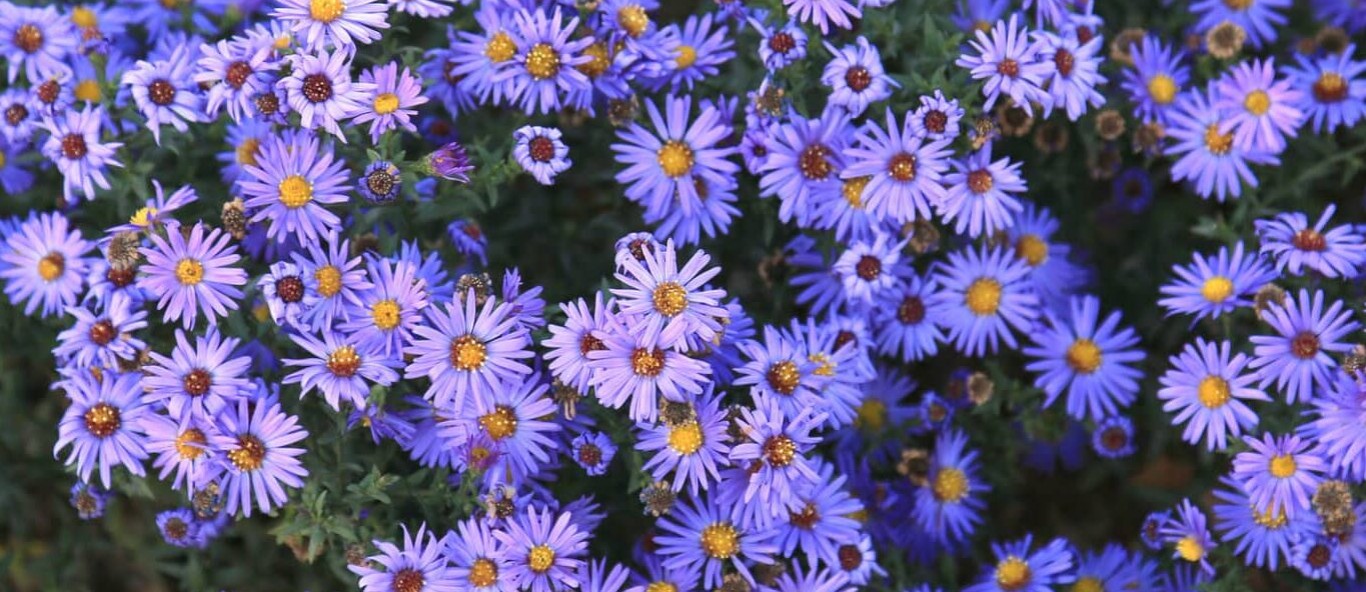
Description & Impact: The smooth blue aster typically grows 1.5 to 4 feet tall with upright, clump-forming stems that can spread 1 to 3 feet wide. Its stems are smooth and sometimes slightly waxy or bluish, distinguishing it from other hairy or rough-stemmed asters. The leaves are alternate, lance-shaped to oblong-ovate, smooth, and clasp the stem, with larger leaves at the base and smaller ones toward the top. It produces daisy-like flower heads 0.5–1.25 inches across, with 15–30 ray florets in shades of lavender, light blue, or occasionally white. The flowers bloom from late August through October, providing a crucial nectar source and pollen for bees, butterflies, and other late-season pollinators, including monarchs and the Pearl Crescent butterfly.
Plant Medical History: The plant’s roots, leaves, and flowers were traditionally used to treat respiratory ailments such as coughs, colds, bronchitis, and seasonal allergies. In traditional Chinese medicine, aster roots (zi wan) were used to release coughing and expel phlegm. The smooth blue aster was also used to address digestive discomfort, including indigestion, stomachaches, and bloating. Topically, the plant was applied to skin irritations, rashes, wounds, bruises, boils, burns, and even poison ivy contact dermatitis. It was used in poultices and as a topical anti-inflammatory to reduce swelling, fevers, and pain.
Cultivation & Garden Use: It grows well in zones 3–8, preferring well-drained soils, from sandy loam to clay loam, and can adapt to dry to medium moisture. This plant can be found in either full sun or partial shade, and once established, it is quite drought tolerant. This is considered a cornerstone species for late-season nectar, attracting bees, butterflies and other pollinators. This works well for companion planting with other early-blooming perennials, which extends the nectar availability of the environment.